The Sky’s the Limit: Why AGITO SkyTrax Was Chosen for Amazon Prime Video’s New NBA Studio
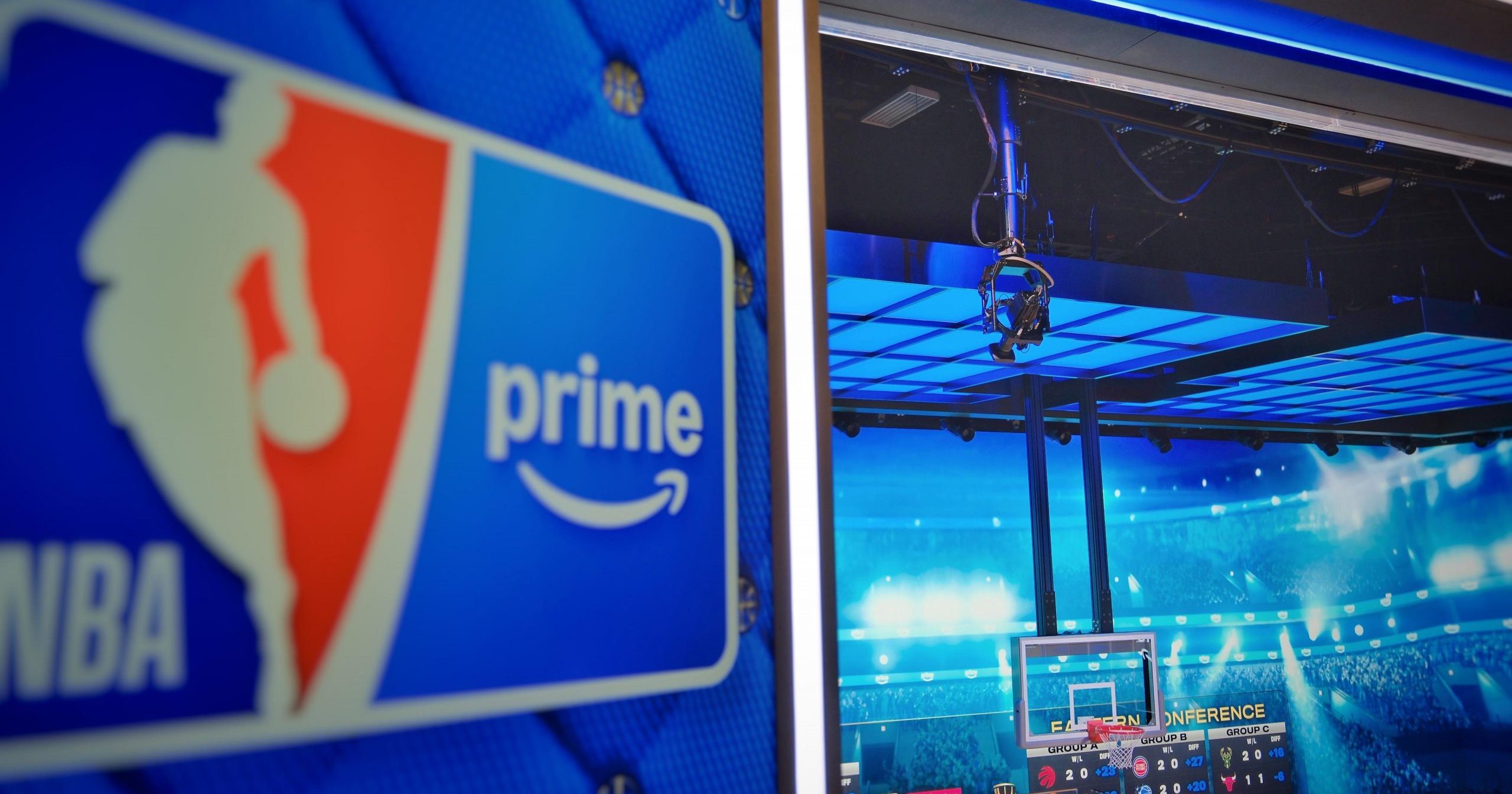
When you first walk into Amazon Prime Video’s new 13,000-square-foot NBA studio in Culver City, the scale is hard to miss. The two-storey space is wrapped in LED screens, built around a regulation half-court and designed to switch easily between pre-game discussion, analysis and live broadcast. It’s a studio that’s on air a lot, and has to keep working, even as the look and format change.
To support that Amazon needed an overhead camera movement system that could relied on every day. Not something that had to be built, adjusted or checked before each show. That’s why AGITO SkyTrax was chosen.
Some overhead camera systems rely on belts, which can struggle over long distances or curved runs. Over time, that can mean small shifts in alignment or inconsistent movement — not ideal when you’re live on air several nights a week. SkyTrax uses a rigid rail design instead, keeping the camera aligned and moving consistently from one end of the run to the other.
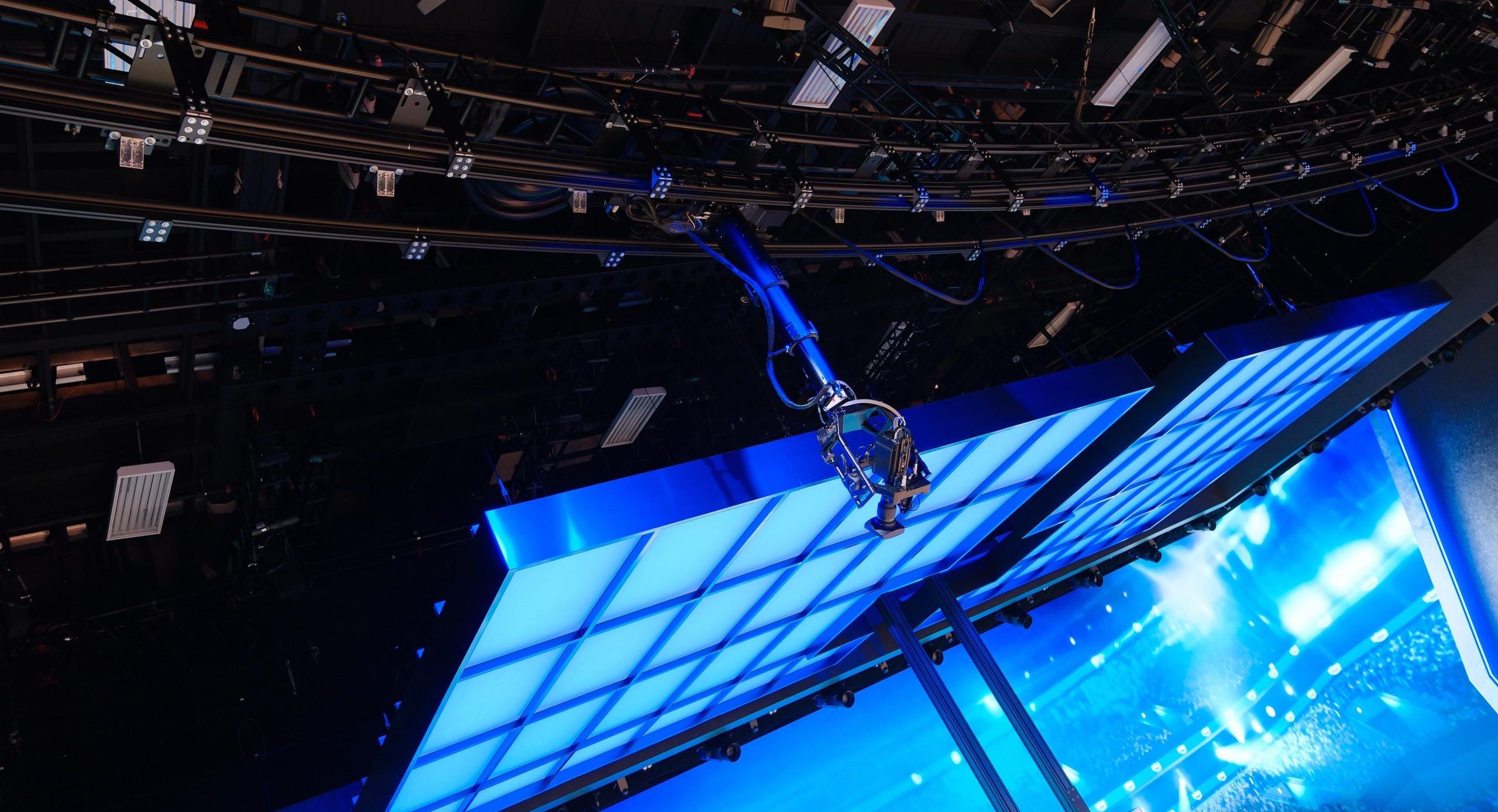
SkyTrax was installed as a permanent overhead rail system, with two curved aluminium tracks designed to fit the building exactly. One runs above the mezzanine, framing the pre-game desk from above. The other follows the curve of the half-court, supporting overhead shots used during analysis and play breakdowns. Because the rails are shaped to the space, the camera can move smoothly across long curves without drifting.
Both rails are hard-wired for power and data. That means no batteries to change, no charging schedules and no daily setup. The system behaves like part of the building rather than a temporary rig — it’s always on and ready to go.
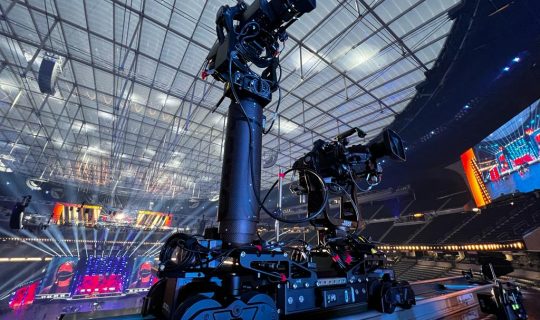
Each SkyTrax carriage is paired with a FoMaSystems ANTARES stabilised remote head, mounted on the AGITO Column. Together, they give the studio smooth overhead movement as well as true top-down shots, without needing to re-rig or change the setup between shows.
Because the rail system and the camera head are designed to work together, a single operator can control both. That simplifies the workflow in the gallery and gives directors confidence when calling shots live, knowing the camera will move, frame and settle exactly as expected.
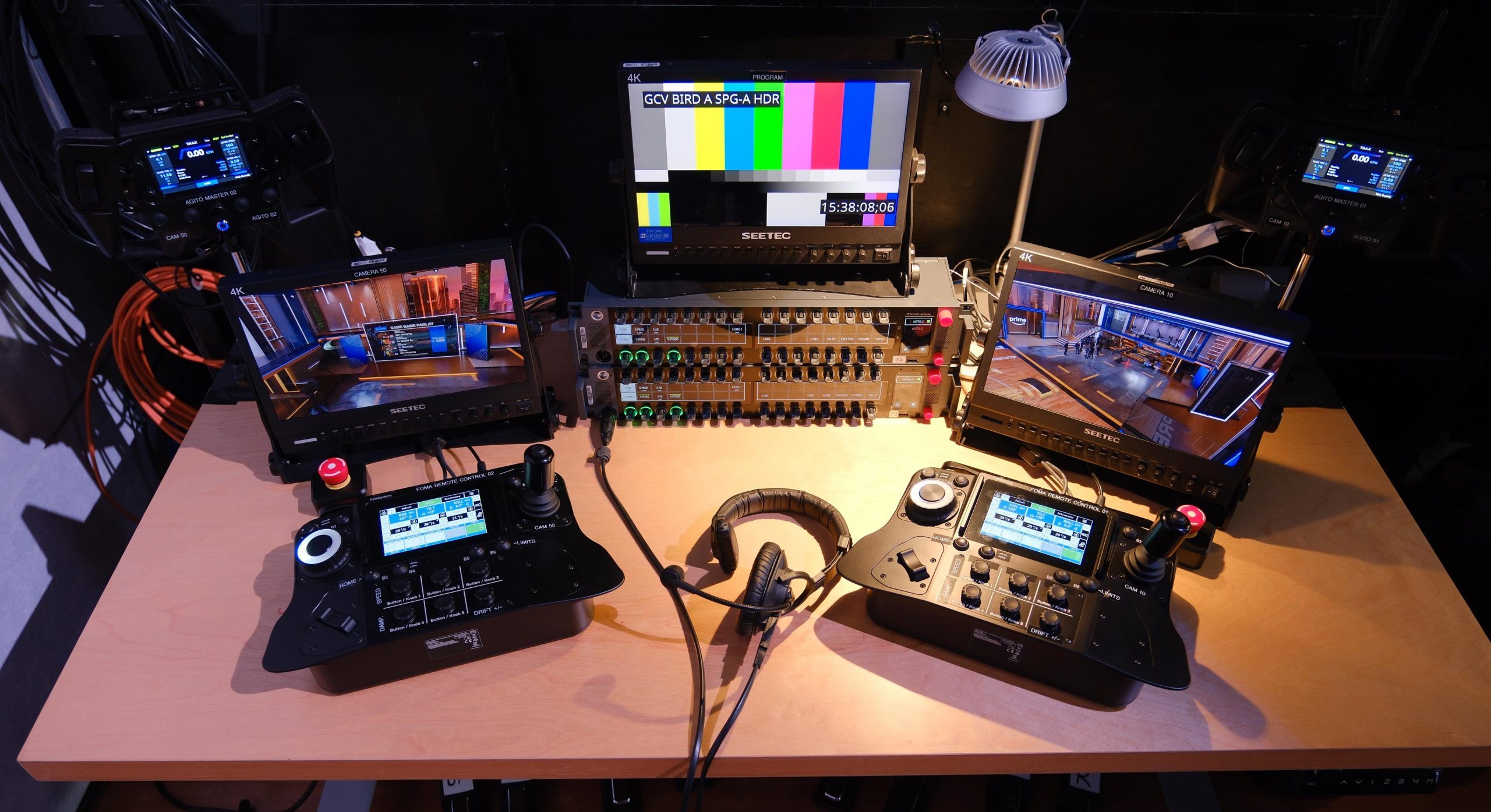
In a studio where lighting, graphics and virtual elements can change quickly, SkyTrax provides something consistent to build around. It turns complex overhead shots into something predictable and repeatable.
Put simply, SkyTrax was chosen because it makes ambitious camera movement reliable. When overhead motion is built in and always ready, directors can focus on the broadcast itself — not on whether the camera system will behave. For a busy, always-on NBA studio, that kind of permanence just makes sense.