MASTER OF MACHINES: HOW AGITO WON OVER METALLICA
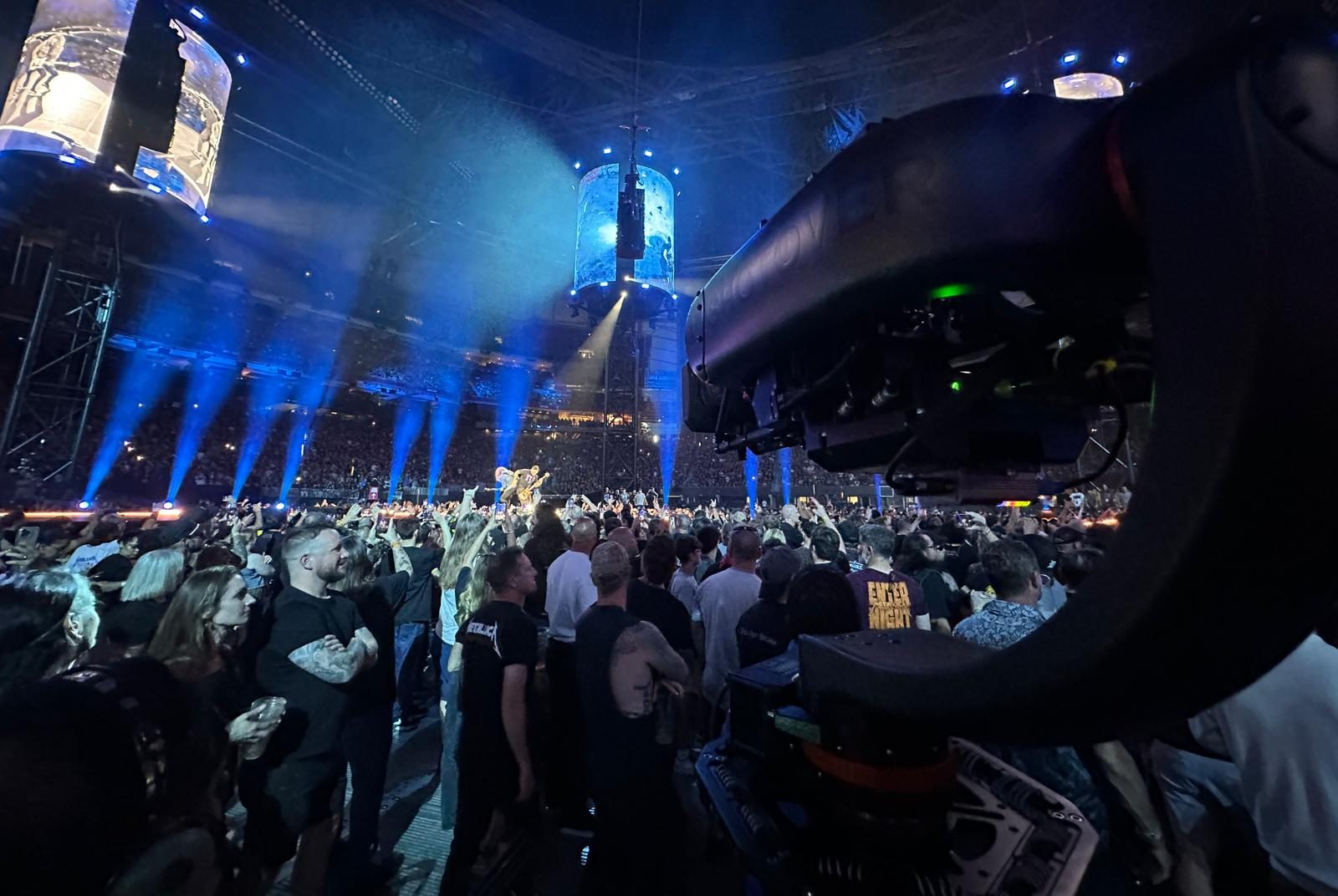
The first thing you learn when introducing a robot to a Metallica is that subtlety matters. Certainly, more than one might assume for a heavy-metal band known for its flashy pyrotechnics and occasional light property damage. So, when AGITO, our robotic camera system, first rocked up on their stage, the mission wasn’t to impress. It was simply not to alarm anyone.
From the beaches of Noosa, where AGITO operator Josh Levi-Rodgers briefly escaped for surfing between shows, to the bowels of yet another stadium load-in, he describes the early days as “gentle exposure therapy” for all involved.
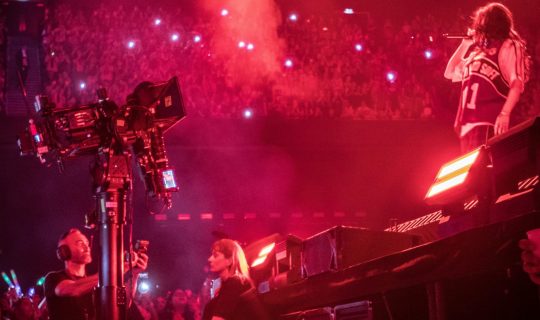
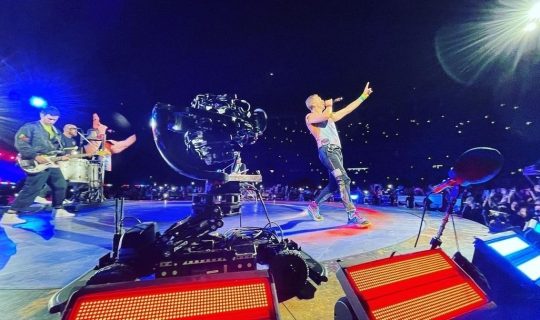
Because when AGITO – in Sports mode – first arrived on the US leg of the band’s four-year, stadium-swallowing M72 Tour, it did so with the shyness of a new kid at school. Parked to the right of James Hetfield’s mic stand, it behaved less like a roaming camera system and more like a very small, very obedient Towercam. Let them get used to it, the director insisted. After all, when you’re sharing a stage with a band that has spent four decades weaponising the alchemy of sound, barging in with a robot on wheels is not wise. Far better to arrive quietly and wait for someone to ask what it does.
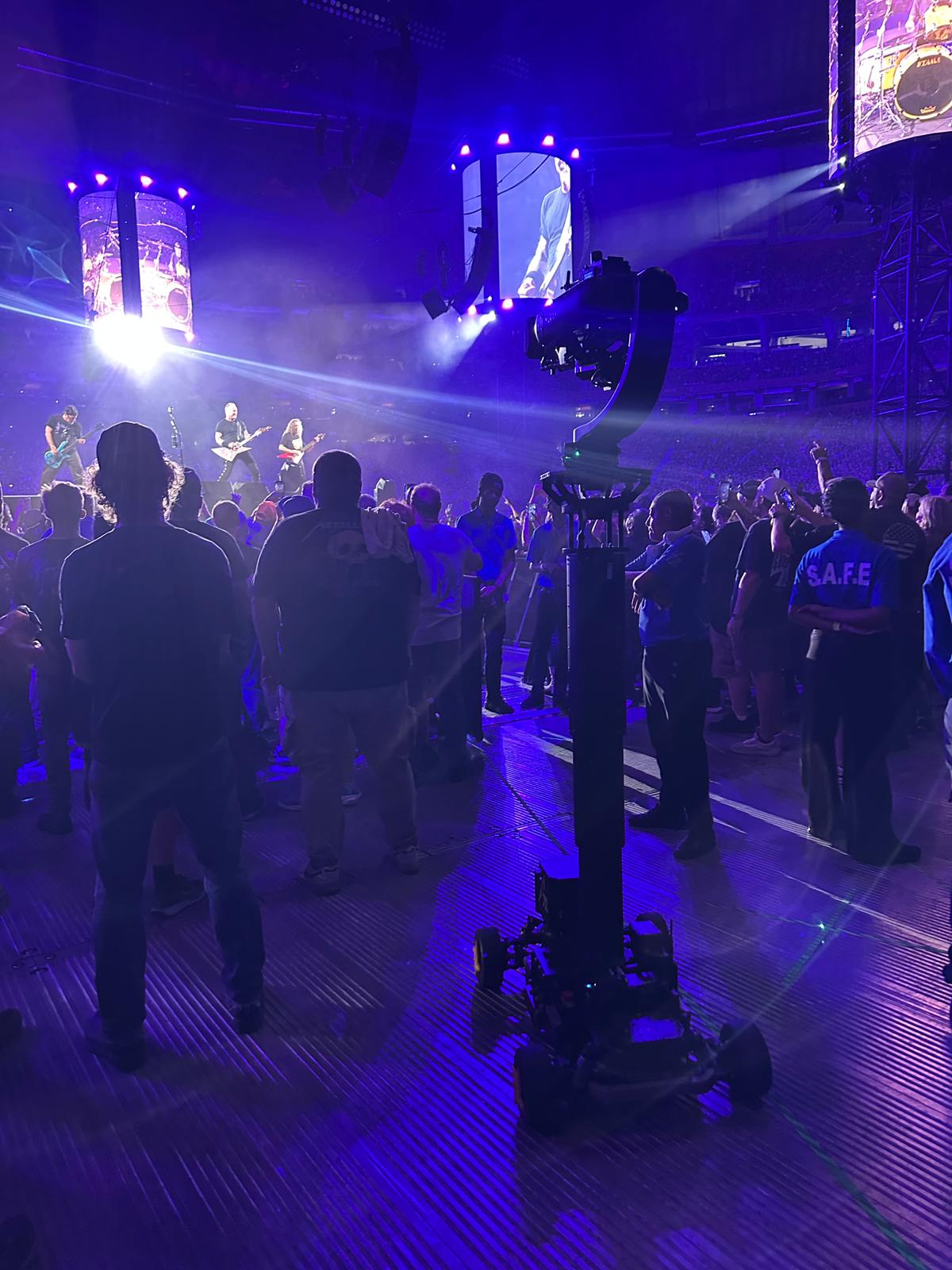
And yet, quietly was never going to last. Metallica’s shows are kinetic by design. The band doesn’t simply stand onstage; they circulate through it, redirecting the crowd’s attention with every step. The M72 tour is performed in the round: a circular stage, a drum kit that seems to migrate from one song to the next, and four musicians who use the perimeter as a running track. “The band don’t really stick to fixed positions; they just roam wherever the moment takes them,” Josh says. “And that’s the beauty of AGITO: it isn’t tethered. It can move as they move.”
EARNING THE BAND’S TRUST
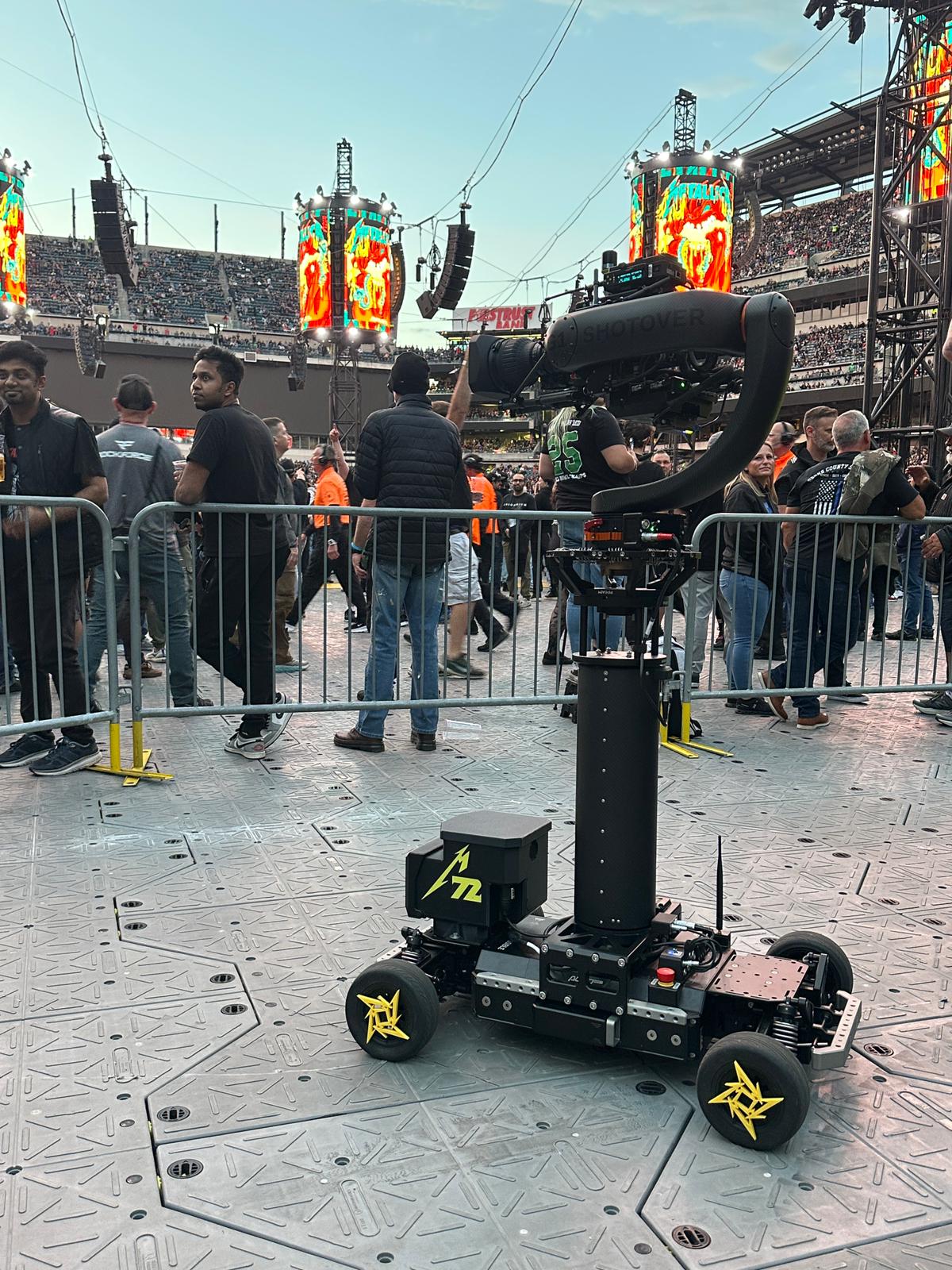 As the US leg progressed, AGITO began to do exactly that. Once it had earned the confidence of the band (and proved it wasn’t the sort of robot inclined to make sudden bids for independence), its leash lengthened. It edged along the Mojo barrier, before venturing up onto the concourses to capture wide, cinematic sweeps of the crowd and stage – shots normally reserved for helicopter pilots or exceptionally tall humans. And then came the suggestion that would have once seemed ridiculous: take it into the Snake Pit.
For the uninitiated, the Snake Pit is not a metaphor. It’s a real space; a sanctum carved into the dead centre of Metallica’s stage design and populated by superfans so devoted they could probably identify Lars Ulrich by footprint alone. It is intimate, rowdy and packed tightly enough that most camera systems would balk — and most operators would begin reconsidering their career choices.
“Inside the snake pit was wild,” Josh laughs. “No one had ever really tracked in there before. Suddenly you’ve got Metallica fans screaming in your face and AGITO is holding this low, dirty, foreground-heavy shot. The band loved it.”
The key, though, was doing all this without disrupting the complex machinery of stadium-scale shows. Traditional touring tools behave like the infrastructure they rely on: rails remain where they’re laid; Towercams remain where they’re planted; and handheld operators perform heroic backward sprints until the laws of physics decide to intervene. AGITO, free of all that, simply followed the energy of four men who, although well into their 60s, continue to tear around the stage as if ageing were a rumour.
By the end of the US run, AGITO had shed its training wheels and become an active part of the show’s visual grammar, capturing angles no one had ever managed in the band’s 40-year touring history. Perhaps more crucially, it has done so without upsetting the backline or being flattened by tens of thousands of head-banging fans. What began as a tentative introduction had grown into a working partnership. Metallica learned the robot and – much more impressively – the robot learned Metallica.
And it had to learn fast. “You don’t always get rehearsals on a tour this size,” Josh says. “If the director wants to try something one evening, we just go for it. AGITO lets you adapt on the fly.”
THE TRAINING WHEELS COME OFF
By the time the tour had reached Australia, Metallica had changed the rules again. Gone was the engulfing 360-degree donut of the US run; in its place stood a flat, open stage – deceptively simple, but a gift for anyone with a camera system that can move. And this, Josh says, is where AGITO “really came into its own.”
“We could quickly lay down track, and suddenly we had this perfect environment to start doing 360s around the drum kit,” he explains. With the drum riser fixed instead of migrating mid-show, AGITO could circle Lars cleanly. 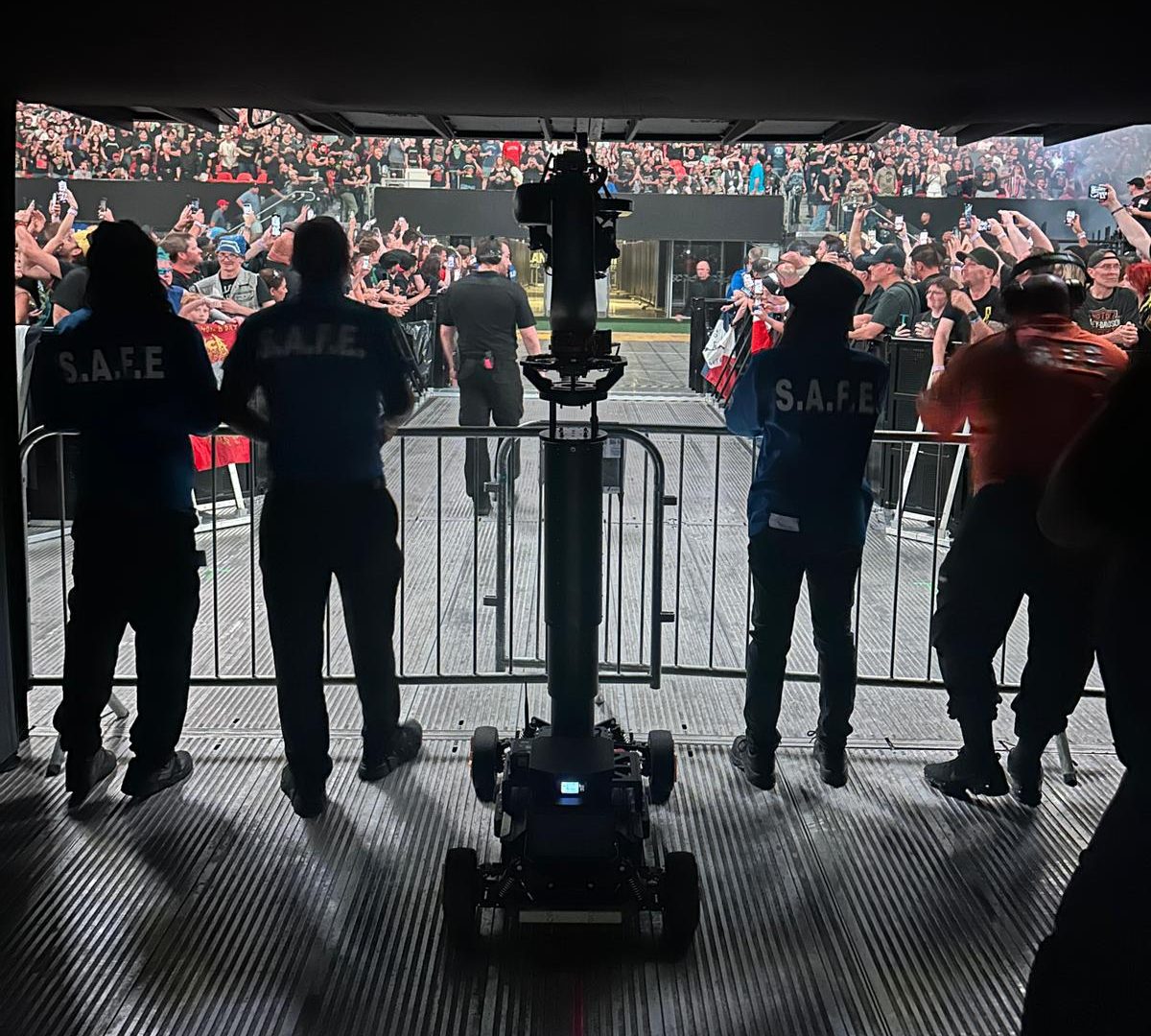
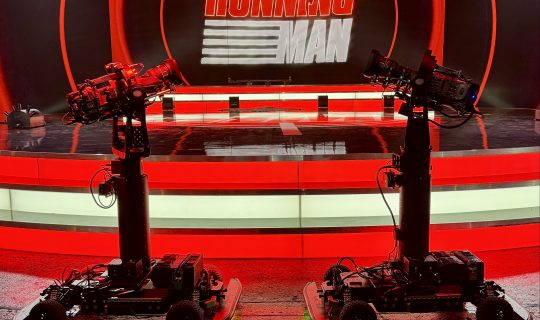
There were aerial options, of course. Metallica had long used Spidercams; elegant, high-flying rigs that skim through stadiums like futuristic dragonflies. But they have one immovable limitation: they can’t go low. “Having AGITO with the AGITO Column meant we could get really nice low perspectives and then crane up and go above the drum kit,” Josh says. “We wrapped around the amps, followed the band as they came together or split apart. You could show relationships you’d never normally see.”
The band, unsurprisingly, noticed. By the time the tour hit Sydney, AGITO had become a fixture. And then something unexpected happened: James Hetfield started addressing it directly. “By the end of the night, he’d come up to AGITO, lean into the lens and scream his thanks to the city,” Josh explains. “If it was a human behind the camera, maybe that reaction wouldn’t have happened.” There is something disarming, it seems, about a machine that can stare back without judgement.
A ROBOT THAT KNOWS THE ROOM
Touring crews, for their part, are famously sceptical of anything new that might slow load-out – a category that includes almost everything. But AGITO won them over by doing something artfully straightforward: staying out the way. “It’s another thing on stage,” Josh acknowledges, “but at least it’s a thing you can drive out of the way.” Its mobility meant fewer obstacles during changeovers and fewer migraines at 1AM, when several dozen flight cases must all occupy the same square metre of floor.
And then there is 4Wall, Metallica’s production company. “It’s also down to how the system’s set up,” Josh says. “4Wall have done an amazing job of creating a system to package and pack away the AGITO that makes it very fast. It’s just a few pieces, and that means your load-outs are that much quicker.”
Still, not all challenges were solved by good manners and efficient packaging. Metallica shows generate enough low-frequency energy to make the floor behave like a living creature. Some nights the stage felt solid; on others, the plastic hex flooring floating over NFL turf shifted like a polite but unstable pontoon. Stabilisation systems do not love this. But AGITO adapted.
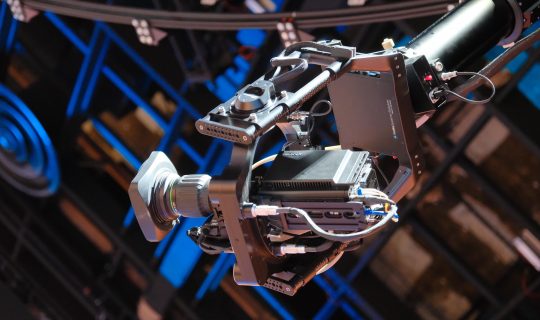
“Sometimes you need things a bit softer, sometimes a bit stiffer – and it helps that AGITO is basically Meccano for grown-ups,” Josh explains. “The suspension isn’t fixed; it’s adjustable and can be reconfigured depending on the quirks of the venue. The shock system and the rubber tyres already absorb a surprising amount of vibration on their own, and with the ISO dampers we added, we could track pretty much at full speed and still have a stabilised image.”
Night after night, stadium after stadium, AGITO settled into its role not as a novelty, nor as a replacement for anything, but as an expansion of what was possible. It joined the vocabulary of the show. The crew even decorated it with custom Metallica rims and a California number plate – superfluous, affectionate touches you grant only to things that have earned their place.
In the end, AGITO didn’t transform Metallica’s show by drawing attention to itself. It did the opposite. It slipped into the machinery of a touring operation perfected over decades and expanded what that machinery could do. The partnership worked because neither side needed the spotlight – only the shot. And if a robot can earn a nightly roar of approval from James Hetfield, it’s a sign not of a future where machines replace people, but of one where the smartest technology simply helps humans make the show better.