THE ROBOT THAT LEARNED TO TOUR
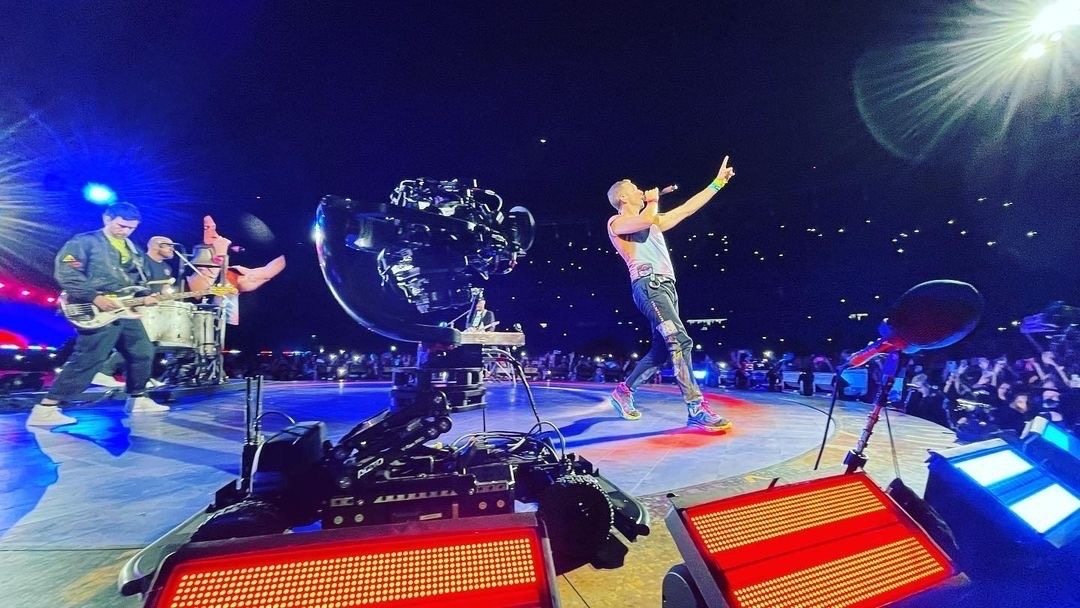
For decades, touring has been a strange blend of the miraculous and mildly terrifying. Stadium shows appear overnight, vanish by sunrise and somehow, despite jet lag, weather and the unchanging laws of physics, artists are filmed, framed and lit in ways that suggest none of this is remotely difficult. But behind the illusion lies a truth everyone in the industry knows and nobody says out loud: touring is messy.
Stages differ. Crews grow smaller. Budgets lurch. Artists want more cinematic movement; audiences demand more immersion and video directors, an existentially exhausted species, are asked to create live pictures that feel like music videos. The demands are rising; the margins, as several seasoned operators have reminded us, are very much not. And yet, in the middle of this logistical mayhem, a small, modular robot has become one of the most relied-upon tools in the touring ecosystem.
This is the story of how AGITO, a system born from natural history and honed on sports, found its place in live music.
The Touring Myth: “Every Venue Is Different”
One of the great misunderstandings about touring, perpetuated by all of us who’ve only ever seen a show from the stalls or seats, is that every venue is a unique puzzle. Lisbon on Tuesday, Lyon on Wednesday: surely the camera team must spend each afternoon relearning the universe from scratch? In reality, disorder lives elsewhere. While capacities change, the actual working footprint of a big tour is surprisingly consistent. Productions are typically designed around the smallest venue on the run, then dropped into larger spaces without increasing their physical dimensions.
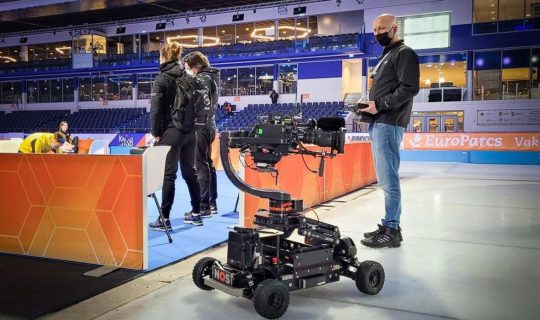
What does change is the architecture around that footprint: trim heights and backstage mazes that seem to have been laid out by a bored Minotaur. Dean Clish, co-founder of Luna Remotes, puts it more bluntly: the stage size may shift a little, but the real battle is vertical. This where AGITO’s modularity bites: the same base can live low on the deck in one arena, then gain extra risers and a lifter in the next so the camera clears the edge of an eight-foot stage without rebuilding the entire system from scratch or needing to hire an entirely different piece of kit.
The repeatable footprint is also why tours rehearse the way they do. Peyton Penual, AGITO operator at Shift Dynamics, talks about productions renting full-scale rehearsal spaces or even football stadiums, as Beyonce’s team did, to block out the show in something close to its final dimensions. Once the choreography of band, dances, cameras and screens is mapped inside that reference space, the job on the road is less about reinventing the wheel and more about squeezing that same wheel into a different loading bay each night,” he explains. A camera system that can be built on its tyres in under 30 minutes and then driven to position fits that mentality perfectly.
And yet, for all this underlying sameness, every venue still finds its own way to be awkward. Peyton recalls MagTrax runs crossing aisle entrances where distracted, slightly drunk fans suddenly discover there’s a robot at their feet. But this is the real touring equation: a show designed to a standard footprint dropped into a stubbornly non-standard reality. AGITO’s job in that equation isn’t to magic away the differences, but to live comfortably inside them – adjusting height, switching from free-roam to MagTrax, bending its pathways to the room (or the inebriated), and doing it all without demanding a full rethink of the camera plan.
Born in Nature, Raised in Arenas
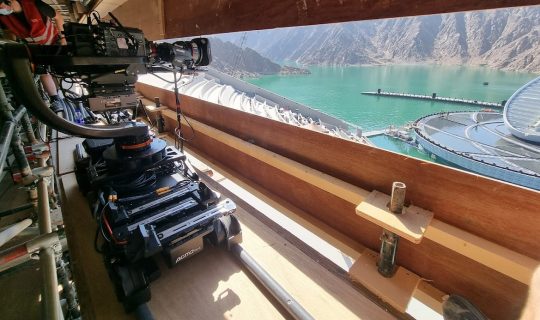
AGITO’s early life was spent in the quite different world of natural history, sneaking along forest floors, shadowing wildlife and capturing movement with the kind of precision that makes documentary directors talk about the kit in near-religious tones. Later, it was pushed into sports, where speed, stability and the ability to react instantly became part of its engineering DNA. Before AGITO had ever rolled into an arena, it had survived elements, rogue footballs and the general unpredictability of anything that moves of its own free will.
In that sense, touring was never a leap so much as a change of climate. “When you’re touring, you need gear that can take a beating,” says Dean. “AGITO is one of those systems we’ve found that just… works. Night after night. No drama.” Peyton echoes the sentiment from across the Atlantic: “It’s a powerhouse. You can toss it in the back of a car, drive it three states, pull it out, switch the batteries, and it runs like it did in rehearsals.”
This engineering logic is obvious once you hear operators explain it. A nature rig can’t rattle its presence to a nesting sociable weaver; a sports camera can’t drift off-axis mid chase. Those same instincts serve it on the road. In arenas with mezzanines vibrating under thousands of fans on festival decks still from tacky from an afternoon downpour, or on thrusts awash with pyrotechnics, AGITO’s engineering lineage becomes less a point of pride and more of an insurance policy.
And Gen 2 sharpens that lineage. The new silent drive and steering, overbuilt to withstand the sort of abuse normally reserved for British TV’s hostile Robot Wars, gives operators smoother starts, cleaner stops and the sort of finesse that makes a close-up look intentional rather than lucky. The redesigned RF architecture means fewer dropouts in the electromagnetic soup of a modern arena; and the addition of Ethernet control, as Brian Shields, technician at RailCam, points out, matters more than people think. “Everything on today’s tours is going IP. Lighting, media servers, and even some audio. Gen 2 slots straight into that network. It just behaves better.”
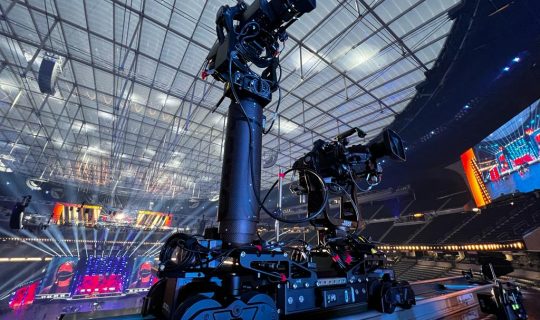
Outdoor shows add their own brand of hostility, with rain turning track into shallow water features; wheels slipping, traction dropping and dolly grips bargaining with whichever god controls the weather. But this is where AGITO’s wheeled biology, and Gen 2 refinements, make it the perfect fit for open-top arenas and festivals. It’s IP54 sealing shrugs off the usual cocktail of rain, dust and beer-mist, and its rubber tyres cling to wet surfaces with unwavering loyalty. It’s why productions like Adele’s Munich residency could run a 320-metre MagTrax loop, circling a drenched stage night after night without slipping into slapstick.
In the end, all three operators returned to the same idea: touring breaks everything eventually, but AGITO holds out longer than most. And when something does go wrong? Its global adoption has become its safety net. As Dean put it, “There’s always someone nearby with a spare part.” In an industry that rebuilds itself every 24 hours, that blend of toughness, plug-and-play friendliness and global community is not just nice to have. It’s the difference between getting yelled at by stage management… and getting invited back next year.
The Hidden Economy of Touring (Why Modularity Wins)
If the audience sees a visually striking performance, the production office sees spreadsheets. Touring has always been a balance between what can be loaded into a finite number of flight cases, and the post-pandemic, inflation-heavy years have turned that balance into a permanent knife-edge. Rising labour and energy costs, alongside Brexit red tape and general economic malaise, have left established acts talking about a “cost-of-touring crisis”, where production spend climbs faster than ticket prices can realistically follow.
In that economy, every piece of kit must pay its way three times over: once in creative value, once in the space it occupies on the truck, and once in the number of people it demands to build and run every night. Brian, whose company recently ran AGITO on Post Malone’s tour, is blunt about it: “The biggest problem on tour is labour,” he says. “No one wants to fly around the world with a massive crew. The value of AGITO is that we can send it with one or two people, wireless, no cable mess – and be out of everyone’s way as soon as the show ends.”
This is where AGITO’s configurations quietly become an economic strategy rather than a product menu. In its Trax guise, running on conventional rails, it offers ultra-stable, hero moves directors dream about – the kind Brian describes on Post Malone, where the system charges down the track from the end of the stage into a tight, dynamic close-up. But track is expensive: it eats truck space, takes time to lay, and, as Dean points out, becomes a serious cost when you’re building custom curves for bespoke stages. MagTrax, by contrast, delivers guided, repeatable movement using a magnetic strip that can be laid into existing surfaces. The effect onscreen is similar: smooth, locked-in motion, but with a fraction of the shipping weight and labour overhead. For tours that want “the bigshot” without the budget, it’s a way to keep mathematics honest.
Even Sports mode, AGITO’s free-roaming configuration, has found an afterlife on tour. Peyton calls it “the mode you don’t need until you suddenly do”, whether that’s sprinting from B-stage to thrust between songs, or shadowing a guitarist who seems incapable of standing still. On certain tours, this mobility becomes the difference between a shot that merely captures movement and a shot that actually feels alive.
All of this folds back to that hidden ledger: a system that adapts to the production, rather than the production adapting to the system, saves money, space, crew hours and arguments. Dean puts it in slightly more diplomatic terms: “Some tours have huge budgets, some don’t. With AGITO, you can tailor the setup to whatever that day’s reality is. That’s why it works.” Peyton is more direct: “It’s the only rig I can switch modes on without rewriting half the camera plan.” The result is a kind of touring pragmatism. AGITO’s adaptability is less a feature list and more a passport: one robot that can slip through the logistical cracks of touring without demanding additional trucks, crew or sleep.
Touring now exists in a world where Coldplay are literally harvesting audience energy, the question of “how many trucks?” has become both an economic and ecological touchstone. Battery-powered systems that charge quickly, and can even sip from solar power, earn instant favour. AGITO fits that category perfectly. Not in a grand, save-the-planet way, touring will always be an energy-hungry circus, but in the modest way that wins production managers over.
And perhaps, this, more than engineering, is the secret to its adoption. Touring teams don’t fall in love with technology; they fall in love with anything that reduces hassle. Anything that avoids another truck. Anything that spares them a 3AM rebuild. Anything that isn’t rehoming polar bears from their icecaps. In this particular economy, measured not in pounds or dollars, but in precious hours saved and crises avoided, a multi-mode system like AGITO is the closest thing the road has to a bargain.
The Cinematic Expectation: What AGITO Actually Does on Stage
If touring has grown more chaotic behind the scenes, it has grown vastly more polished in front of them. The modern arena show is no longer content with being loud, bright and broadly in tune; it must now reflect the grammar of cinema. Artists want intimacy on a scale that defies physics. Directors want smooth, floating movement in environments built out of truss and scaffolding. Audiences want to feel they’re inside of a music video without noticing the small army making that illusion possible.
That pressure lands squarely on the shoulders of camera teams, who are asked to deliver film-grade movement in conditions designed for neither film nor grace. Peyton points to the physical reality of trying to achieve this with traditional tools. “Steadicam operators are incredible,” he says, “but they’re human. You can’t ask someone to sprint backward for two hours and pretend that’s sustainable.” A Steadicam operator has limits; AGITO, infuriatingly for some, does not. What it gives directors, perhaps for the first time, is a guarantee that the move they spent all afternoon finessing in rehearsals is precisely the move audiences will see that night, and the next, and the next. “If I dial a move in rehearsals,” Peyton says, “I can repeat it every night. You can’t do that with a human body.”
But reliability only tells half the story. What operators consistently emphasise is how performers respond to AGITO. A human with a camera invites a different kind of self-consciousness; a subtle awareness they’re being watched. A robot moving at eye level elicits something else entirely. “Artists interact with AGITO in ways they wouldn’t with a person,” Peyton says. “It’s less confrontational. You’ll see someone who never dances, or never moves much, suddenly bloom a little because they’re playing to this thing that’s following them. It brings them to life.” Freed from the emotional gaze of another human, AGITO gives performers the emotional room to lean into it… and even, flirt with it.
And then there’s the shot itself; the thing everyone is secretly chasing. Some artists don’t fall neatly into the category of “physical storytellers.” Not every performer is a dancer, an athlete or a showman; some are singers first, rooted to a mic stand or a riser, and the responsibility of injecting motion into stillness falls to the camera. “AGITO can bring an artist to life,” Peyton says. “The movement adds personality. You can make even a still performer feel dynamic.” A slow orbit can make a ballad feel intimate rather than static; a fast, low track move can turn a guitarist’s walk-on into a heroic arrival. The machine becomes not just a tool but a narrative instrument.
The Touring Family: The Community Behind AGITO
For all the talk of engineering, modularity and cinematic movement, touring isn’t really held together by machinery. It’s held together by the people; by the strange, nomadic families that form in loading bays and hotel lobbies and remain bonded long after the final show call.
“On tour, you’ve got to be more than just technically competent,” Dean says. “You’ve got to be part of the crew’s rhythm. Helpful. Professional. Someone they can trust at 11pm when the schedule’s gone sideways.” His operators, he says, earn that trust not by being invisible but by being useful; the ones who know the stage manager’s shorthand, who can troubleshoot an RF hiccup when the radio channels descend into collective panic.
And then there’s the wider ecosystem; the unofficial AGITO diaspora that has sprung up across continents. Vendors swap spares, operators, expertise. It’s not corporate. It’s tribal. A network built out of necessity and goodwill, held together by the unspoken agreement that touring will punish gear eventually, and when it does, someone nearby will help you get through the next show.
Brian calls it “self-preservation through community,” which may be the most honest definition of touring anyone has given. And it’s here that the technology and the people neatly meet. AGITO’s global footprint doesn’t just mean the system is widely used; it means it’s widely supported. The community becomes an extension of the hardware – a kind of distributed reliability. The machine keeps working because the people around it do.
The Near Future: Where Touring Robotics Goes Next
If AGITO has carved out its place in touring on the strength of creative flexibility and stubborn reliability, its next act points toward something more ambitious: intelligence. Not the science-fiction kind, but the quieter, more pragmatic kind that lets camera teams do more with less.
Every operator interviewed for this article, unprompted, drifted toward the same horizon. Timecode already governs the shape of a show; lighting, pyro, video cues, lasers and even stage lifts now march to the same invisible clock. What’s missing is a camera system capable of speaking that language fluently.
That, in essence, is where upcoming tools like COMMANDER begin to open things up. It starts by bringing control into one place – drive, steering, navigation and head control (with select systems) – sparing operators the indignity of juggling multiple handsets like a stressed-out octopus. But the direction of travel is broader than that: toward systems that can align more naturally with the wider show environment, where movement can be planned, repeated and integrated without friction.
Safety, too, is evolving. Not in the crude sense of emergency stops and barrier tape, but in systems that reduce near-misses long before they occur: better awareness around the robot, more considered behaviour in crowded or unpredictable environments, and motion logic that favours caution over bravado when the room gets chaotic. As tours continue to tighten their backstage footprints and push cameras ever closer to performers, those quiet, invisible layers of decision-making will matter most.
Running alongside this is a broader shift toward simplification. Fewer bespoke integrations. Less time lost to workarounds. A gradual move toward systems that play more nicely together, rather than behaving like incompatible medieval kingdoms. For touring, where time is the only true currency, even small gains here compound quickly.
None of this makes the humans less essential. If anything, it frees them to do the parts of the job that actually require judgement, taste and the ability to find beauty in a room designed primarily to sell lager. But it does point toward a landscape where the robot becomes not just a helpful tool, but an intelligent collaborator – one that lightens the cognitive load rather than adding to it.
The future of touring, in other words, isn’t robots replacing humans. It’s robots taking on the worst of touring, so the humans can focus on the best of it.