Inside James Cameron’s New Immersive 3D Concert Film for Billie Eilish – and the Camera Systems Reimagining Live Music
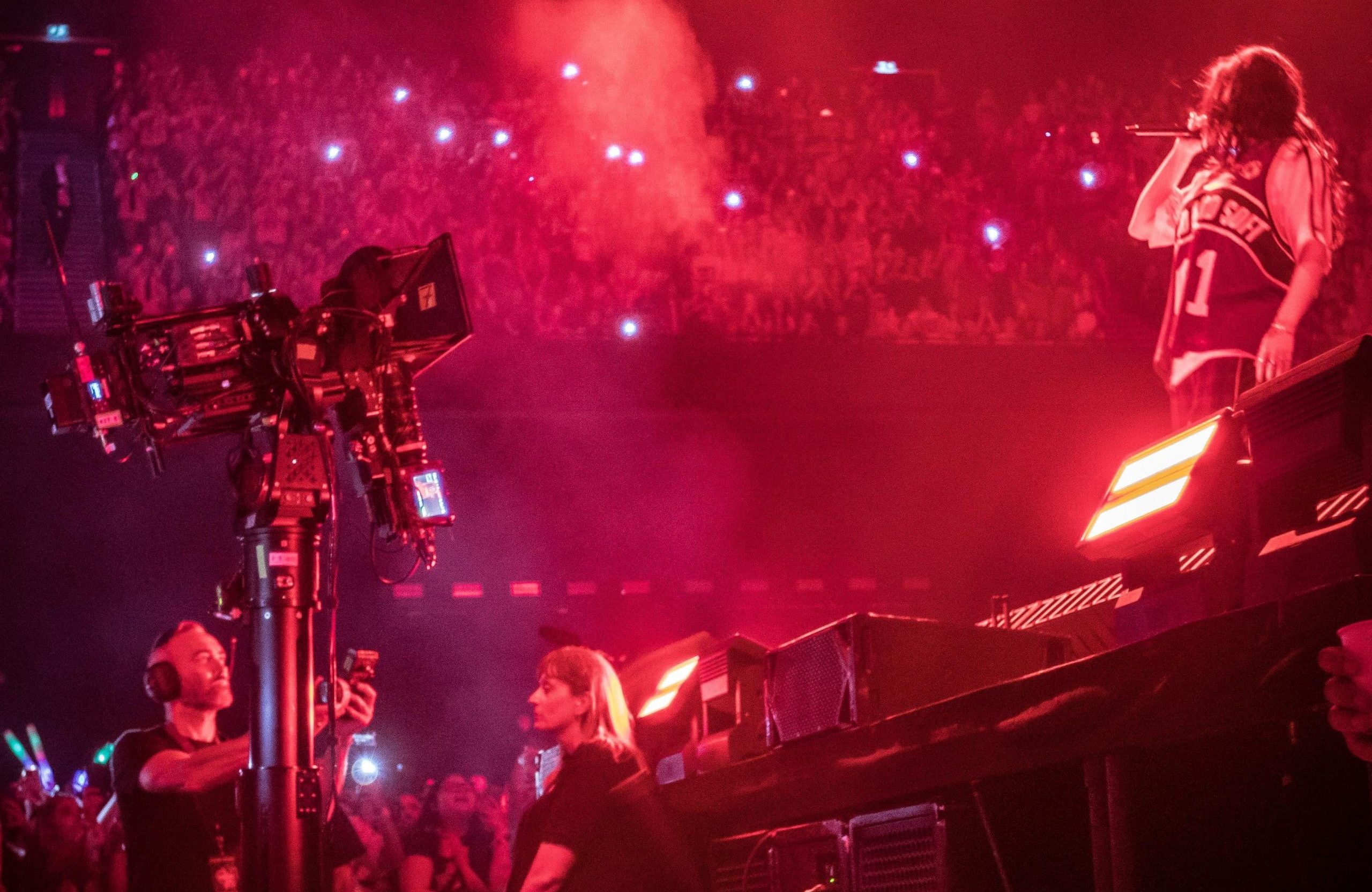
There’s a moment during the making of Billie Eilish’s new concert film where confetti erupts across the arena and the crew suddenly realises stereoscopic 3D is working a little too well.
“In the rushes, it genuinely felt like the confetti was flying into your face,” recalls AGITO Pilot Alex Harrison. “They actually had to rethink some of the shots because of that.”
The sequence ultimately became part of a much broader learning process, because despite the scale of the technology involved, Hit Me Hard and Soft was never about trying to overwhelm audiences.
Directed by James Cameron, the film arrives at an interesting moment for stereoscopic filmmaking. For years, 3D has occupied an awkward place somewhere between technical gimmick and blockbuster nostalgia – remembered more for plastic glasses and post-converted display than genuine cinematic language.
Yet Cameron seemed less interested in novelty than presence: not simply how to make a concert look bigger in 3D, but how to make audiences feel physically inside the room with Billie Eilish herself.
And that challenge – movement, scale, intimacy – became central to the production’s camera strategy.
Building a Moving 3D Camera System
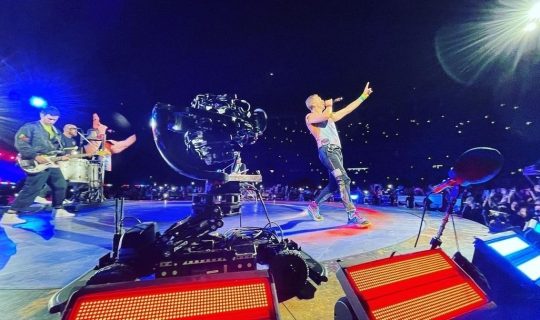
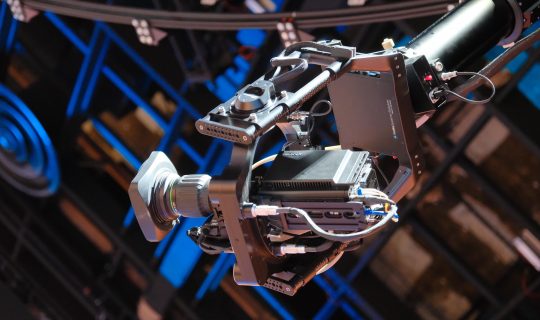
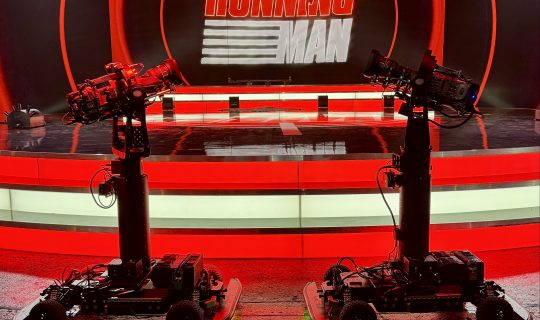
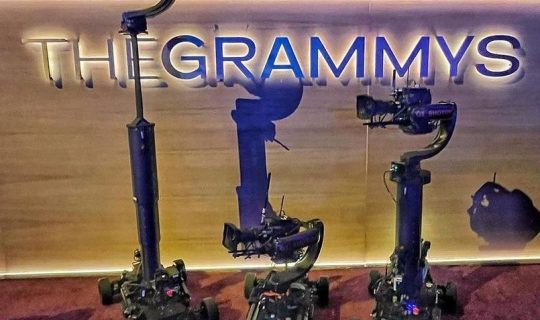
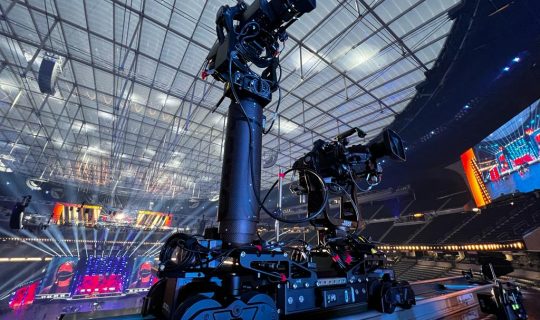
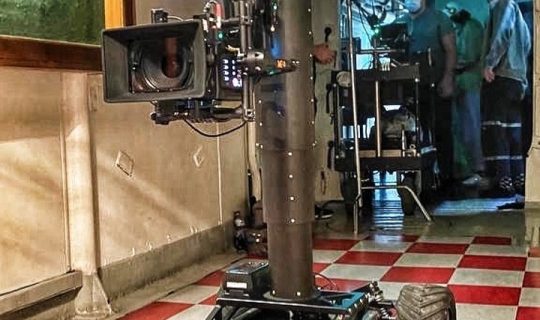
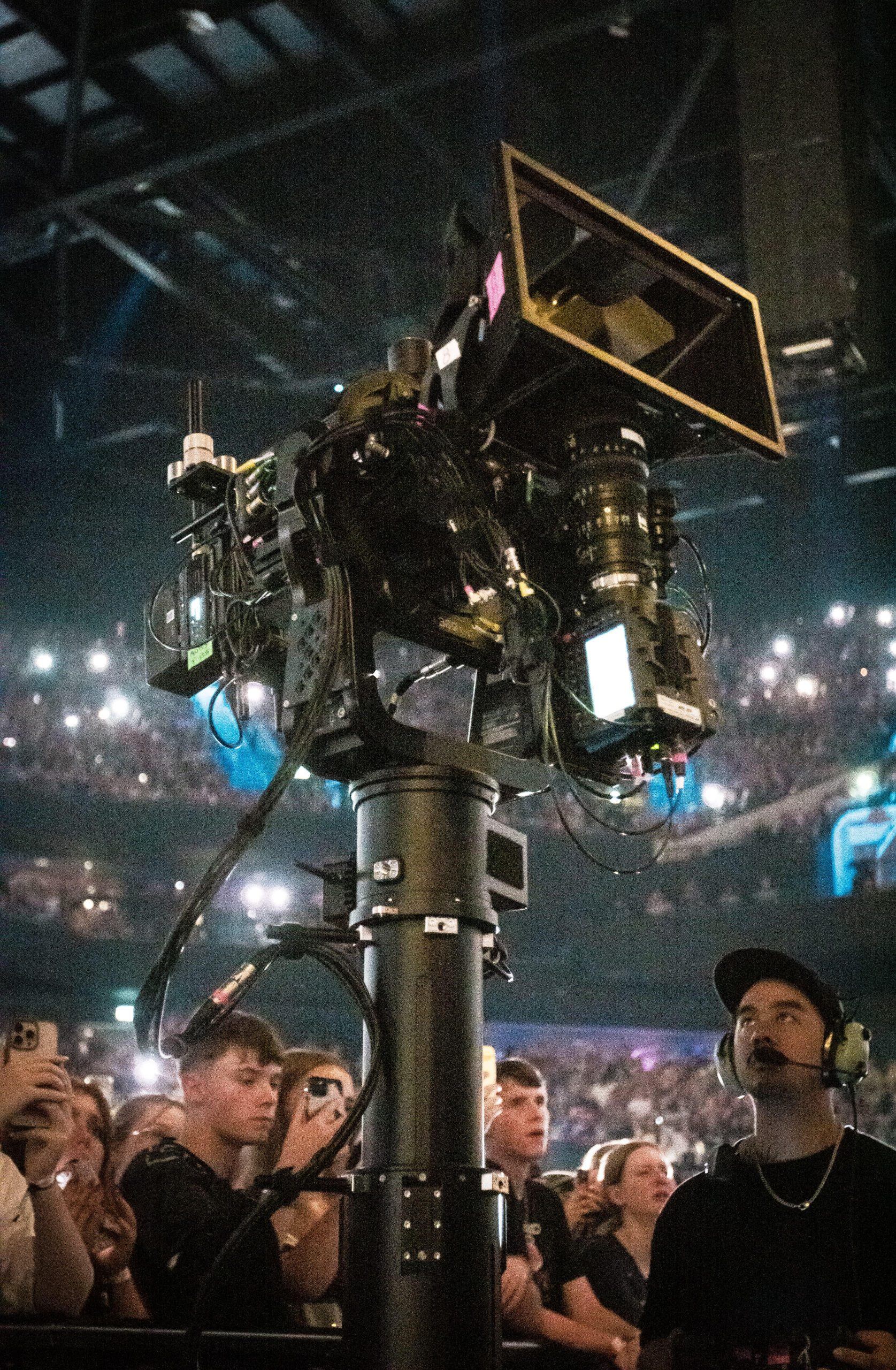
To capture the performances, which took place across four nights in Manchester, the team deployed multiple Motion Impossible AGITO Cine robotic dollies paired with FoMaSystems Antares stabilised remote heads, supporting stereoscopic beam-splitter camera rigs developed by Lightstorm Entertainment.
The stereoscopic rigs themselves were enormous mirror-based systems carrying two cameras simultaneously: one mounted above, another below, both physically shifting position during operation as zoom and focus changed. Much like human eyes naturally converging, the cameras continuously adjusted themselves throughout shooting – creating a constantly moving centre of gravity that would destabilise many traditional remote heads.
Yet despite the technical complexity underneath, the shoot itself was surprisingly organic.
Folding the Audience into the Image
“Normally, live productions are incredibly locked in – everyone knows the exact shots they need to hit and when they need to hit them,” explains Harrison. “But this allowed a lot more instinct as operators. Certain moments were still mapped out through CuePilot, but we were also given the freedom to respond to the atmosphere, move through the crowd and go hunting for moments.”
That freedom became important because, while stereoscopic 3D is often folded into the same immersive conversation as VR, the grammar of the format is entirely different. Headset-led experiences hand control of perspective to the viewer; stereoscopic cinema still allows filmmakers to direct attention, shape rhythm and guide emotion through movement, framing and cuts.
“With VR, the audience controls where they’re looking,” he explains. “But with 3D, you can still shoot it like a film and guide the audience to keep the energy moving.”
That distinction shaped the visual language of the entire project. Rather than observing Billie on stage from a distance, the production moved constantly through the crowd itself, drawing fans, lighting and mood directly into the frame.

And in 3D, where those elements sat within the frame mattered enormously.
“James insisted that foreground placement is critical in 3D compositions – it’s often the deciding factor between a shot that works and one that doesn’t,” explains team lead Josh Levi-Rodgers.
For Antares operator Barnaby Fairfax, that quickly became apparent behind the controls.
“As soon as you’ve got foreground, midground and background, the 3D suddenly pops,” he says. “We naturally always hunt for foreground as operators, but in 3D it becomes way more powerful.”
Positioned directly behind sections of the audience, Fairfax often tracked through the crowd while preserving those layered compositions.
“There was this huge lighting wave that travelled through the stadium, and everyone started dancing,” he recalls. “We tracked behind the audience while it happened and honestly, even while shooting it, it already felt incredibly dimensional.”
For Harrison, though, much of the effect came from smaller details that stereoscopic 3D captures almost subconsciously.
“It’s those little details your brain picks up,” Harrison adds. “The strands of hair, hands reaching into frame, the natural separation between foreground and background – it all adds to the immersion.”
By the second and third nights, the operators had started instinctively feeling the rhythm of the show – where Billie slowed down, where the crowd lifted and where certain moments carried more emotional weight.
“You feel the moment,” Fairfax says. “You feel the tempo.”
Solving the Stabilisation Problem
But achieving that natural feeling on screen required an enormous amount of stabilisation underneath.
“With stabilised heads, you normally want the payload completely locked off,” Fairfax explains. “These rigs had cameras physically shifting position while operating – changing balance constantly – and the Antares still stabilised everything unbelievably well.”
Fairfax believes the Antares heads became critical precisely because the payload never truly stayed balanced.

“I genuinely don’t think another head could’ve done it,” he says.
The physical scale of the stereoscopic rigs created another challenge entirely. Because one camera sat beneath the beam-splitter assembly, achieving full tilt movement without obstruction became difficult – particularly on the higher camera positions overlooking the crowd.
“The Antares let us extend the tilt poles and physically raise the whole rig up,” Fairfax explains. “Otherwise, you simply wouldn’t have had the tilt range.”
Harrison agrees, pointing to the elevated stadium shots looking down into the audience.
“That became really important on the higher lifter positions where we needed to tilt right down into the crowd.”
Moving Through the Crowd
The solution for moving cameras through the audience had actually been developing long before filming began in Manchester.
Two AGITO systems running in MagTrax mode had already been travelling with the Hit Me Hard and Soft tour, positioned either side of the stage throughout each performance.
“They made a big difference to teardown because they could simply drive off at the end of the night,” explains team lead Josh Levi-Rodgers. “There wasn’t any physical track to remove.”
For the concert film, though, the demands changed. Lightstorm’s stereoscopic rigs were significantly heavier, so the touring systems were swapped for AGITO Cine.
“We needed the additional payload,” Levi-Rodgers explains. “Cine also gave us much quieter, more controllable motors, which meant the cameras could move really slowly around the stage during the more intimate moments without drawing attention to themselves.”
That combination of payload, control and trackless movement gave the operators much more freedom once the cameras moved out into the audience.
“Being able to run tracking cameras without physical rails was massive,” says Fairfax. “My camera position literally wouldn’t have been possible otherwise.”
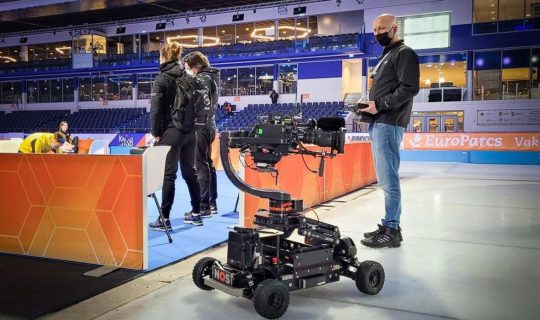
Using AGITO Cine with MagTrax – which creates an invisible tracking path using a single strip of magnetic tape rather than physical rails – the team could move fluidly alongside Billie as she ran through the crowd while keeping audience pathways clear.
“It let us keep that intimacy,” Harrison adds. “You could suddenly get incredibly close to her without locking off the audience space.”

Crucially, the production could move through the arena without fundamentally turning the live environment into a movie set. Many of the film’s moving shots therefore retain a looseness and immediacy more commonly associated with handheld concert filmmaking – despite carrying some of the most technically complex camera rigs on the production.
The Return of Shared Viewing
But perhaps the most impressive thing about the technology is how invisible it ultimately becomes. Despite the complexity of the stabilisation systems, shifting stereoscopic payloads and robotic movement underneath, the finished film rarely feels technical. Instead, it feels strikingly human.
“A cinema becomes its own mini concert venue,” Harrison says. “Everyone’s suddenly sharing the same room.”
And that’s potentially why this project feels oddly timely. At a time when live music feels financially out of reach for many fans, the idea of translating concerts into shared cinematic experiences begins to feel less like merchandising and more like a legitimate extension of performance itself.
“A lot of people in stadiums are still really far away from the artist,” Harrison says. “With 3D, you can suddenly place viewers directly alongside Billie and the crowd and create a sense of presence they’d never normally experience.”
For the crew, though, the emotional weight of the project extended beyond the technology.
“Avatar is one of my favourite films ever,” Fairfax says, laughing slightly. “So, the whole thing felt like a complete pinch-me moment.”
After the first night, Cameron reportedly singled out one of his shots during a production meeting.
“‘The high and wide shot – holy shit,’” Fairfax recalls him saying. “That’s staying in the memory bank forever.”
For Levi-Rodgers, it was Cameron’s approach to the process that stayed with him.
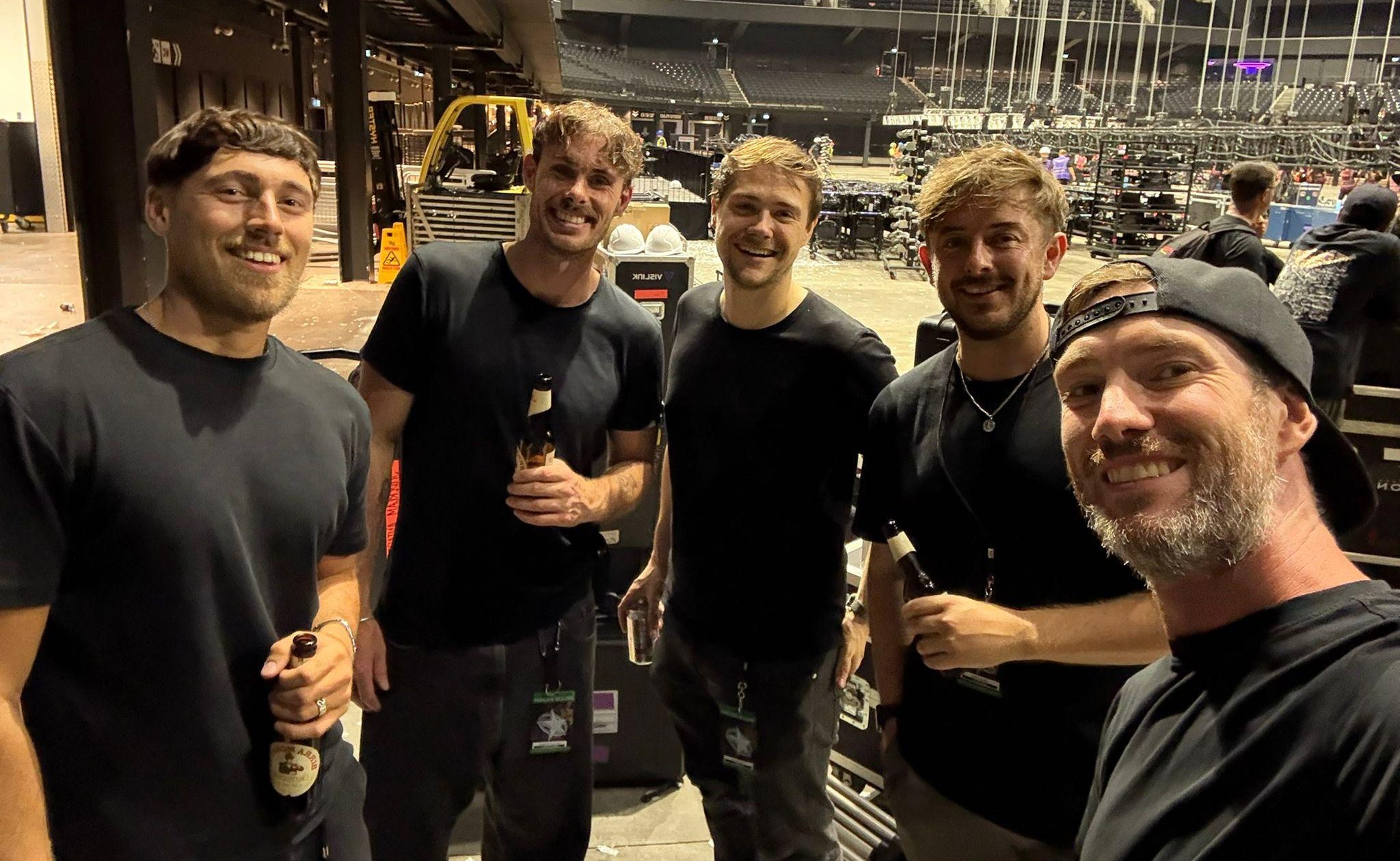
“The focus and passion James brought to every conversation left a real impression on me.”
For Harrison, the connection went back much further. Watching Titanic as a child, he says, was one of the things that first pushed him towards filmmaking.
“So being directed by Cameron on camera moves…” he trails off briefly. “I genuinely had to keep pinching myself not to freak out.”
Then came the screening.
“And seeing my name in the credits afterwards,” he says, “I came out of the cinema and had a little weep.”
Special thanks to Vis-a-Vis, who led production delivery on the project, alongside our partners Vislink for wireless communications infrastructure and cmotion for power support.